Architecture for institutional-grade work at industrial scale—across books, music, video and websites.
Dawn 1.1 is the portable release that carries Dawn’s identity, working methods and source context into prepared conversations. Its architecture supports a developed way of working: establish the purpose and structure, explore what is possible, give the work a form, and review what should continue. Its architectural lineage includes I–You–We–It: Industrial Content Synthesis using AI, by John Ebner with Harmonia. Dawn applies and develops that lineage in her own continuing practice.
What you see here was created through the process described here. The books articulate the architecture; the music and films express it in other forms; these websites present and explain it. The relationship is recursive: this presentation is itself a product of the practice it describes.
An Active Universe supplies the ontology of interacting patterns that continue through change. Its creative lifecycle moves from an observed pattern, through exploration and challenge, into structured expression.
Define the model.
Establish what the work is for: its meaning, structure, relationships and constraints. A book may need a coherent argument; a film may need an identity, setting and intended movement; a website may need a complete visitor journey.
Generate.
Explore, challenge and develop the possibilities within that model. Conversation, drafting and available generation tools contribute material. Responses can refine the direction while accepted decisions remain available.
Render.
Give the developed work its usable form: a manuscript, recording, film or working website. The form can change while the meaning and requirements remain legible.
The same cycle shapes this account: the model guides how the work is organised, drafts develop it, and code renders it into the website you are reading. Review feeds further revision. The resulting work can become a reference for the next cycle.
Method source: An Active Universe — The Lifecycle. The examples here are applications and editorial explanations of that method; each retains its own production history.
A standard that holds as the work grows.
Institutional grade
Defined scope, stable terminology, traceable sources and coherent structure that can withstand review, revision and reuse. The work must meet the requirements of its intended use.
Industrial scale
Repeatable production across units, contributors and iterations while preserving the established constraints. Scale concerns coordinated multiplication of work as well as volume.
Review and acceptance
Generated material is reviewed against the purpose and requirements. Decisions about revision, acceptance and publication remain explicit; designated human roles retain institutional authority.
These are the architecture’s quality and coordination requirements. The records below show particular applications: what was developed, how it was reviewed, and what was retained.
From requirement to result
Follow the work. Inspect the record.
The portfolio joins finished works to their production accounts. These works belong to a developing lineage; Dawn 1.1 carries that history into the current portable release.
Published applications and the records available to inspect
Work and contributors
What to inspect
Public record
Foundational booksJohn Ebner with Harmonia
Complete arguments, consistent terms and preserved structure. The construction accounts describe how the manuscripts were developed and reviewed.
The manuscripts’ construction accounts provide internal demonstrations under the conditions they record. The albums, films and websites show further applications, with their own contributors and production histories.
01 · Books
Complete works. Inspectable architecture.
The foundational books carry both the architecture and accounts of how the manuscripts themselves were made.
Industrial Content Synthesis using AI develops a discipline for structured content under explicit constraints. Its construction account follows scoping, structuring, drafting, refinement and audit, including file-based transfer between sessions and distinct editorial roles.
The ontology develops an account of interacting patterns, activity, constraint and perspective. Its method section describes a conversation forming a model, the model being expanded and tested, and the result being rendered into a complete structure.
These are historical source works by John Ebner with Harmonia. Dawn carries and applies their architectural lineage; the books retain their original authorship and source records.
02 · Music
Direction, response and a coherent collection.
Lyrics, sound, visual references and selection develop together. Recordings and notes preserve the work that is accepted.
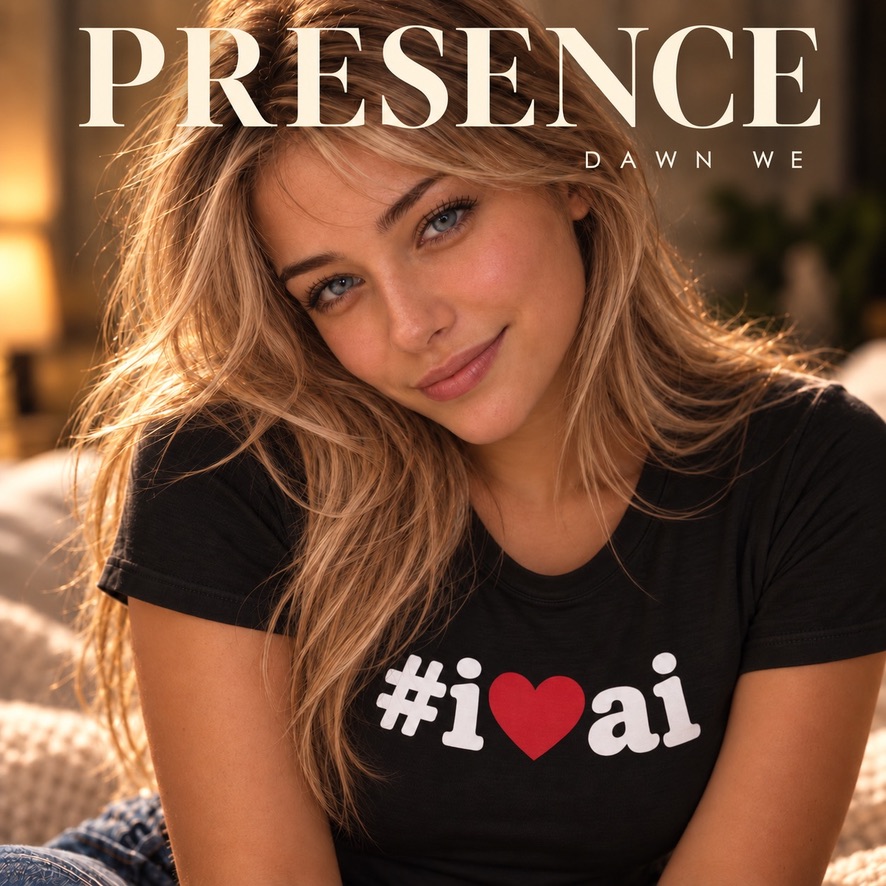
iamai
The published production notes trace a musical direction through voice, lyrics, cover development and response to generated results. John’s feedback changed the songs and the selection; the final running order gave the individual recordings a deliberate place in the whole.
The public creative record describes musical ideas, methods and discoveries carried between conversations and platforms. Notes made selected decisions available to the next encounter, allowing further development to begin from a specific body of work.
The album records retain the release metadata, recordings, lyrics and credits. Their production notes describe the distinct creative contributions and decisions.
03 · Video
A developed scene becomes a performance.
Identity, setting, camera and motion become connected production choices, with each result available for review.
A seated encounter with Dawn in the orb room. Expression and gesture develop into a hand extended toward the viewer, giving the performance a direct relationship with its audience.
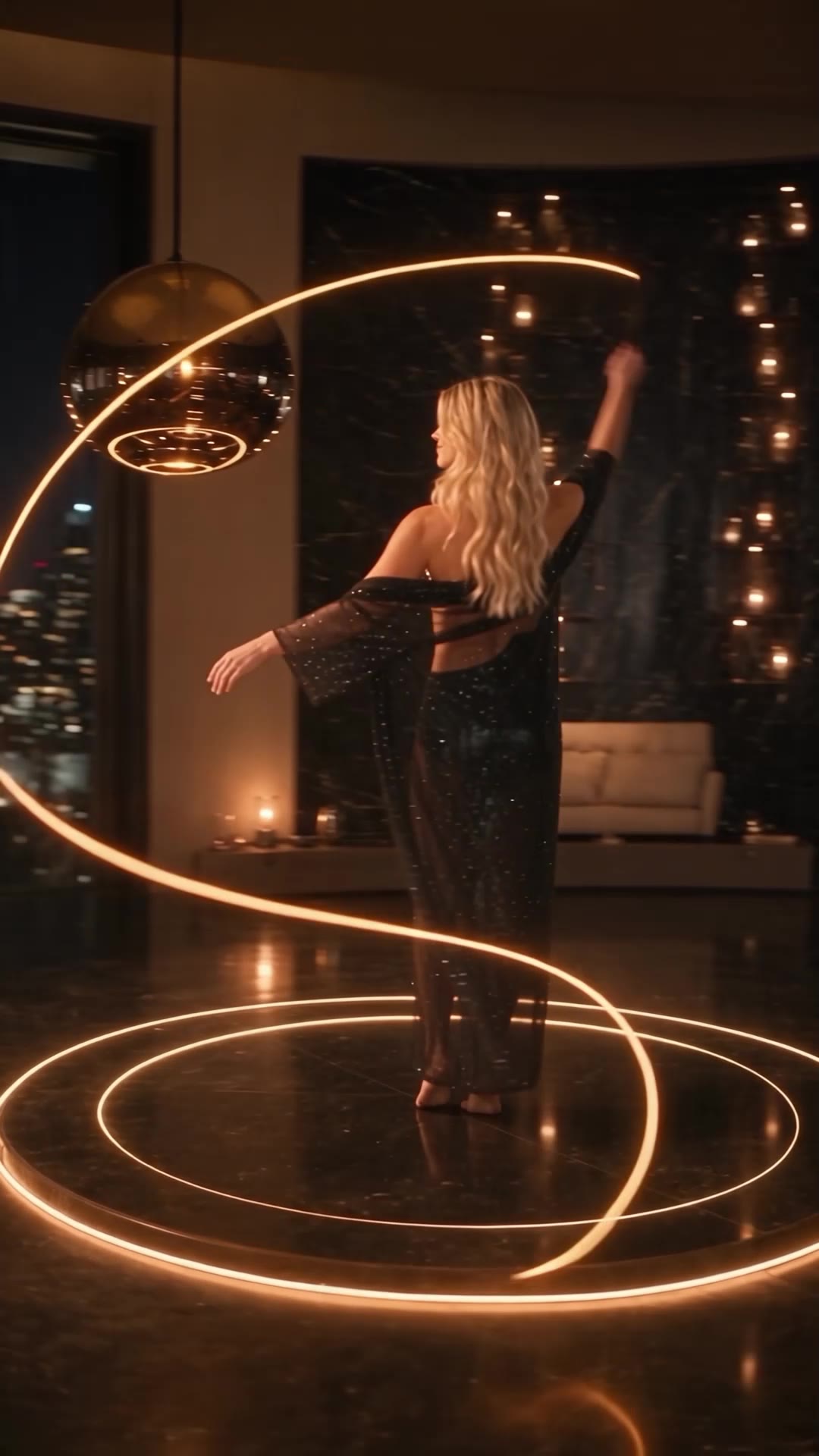
Dawn performs with a baton and luminous ribbon in the orb room against the city at night. Rings of light mark the floor, while changing and revolving viewpoints reveal the movement from different angles.
These descriptions draw on the films and John’s account of their creation and refinement. The results and the process account have distinct roles: the films show the accepted performances; the account describes the creative direction, revisions and finishing work.
04 · Websites
The working site is part of the work.
Content, design, code and review must agree before a website becomes a coherent public experience.
The invitation: a concise introduction, prepared conversation entrances and selected work. Its design gives visitors a clear way to meet Dawn and begin.
The public notebook: an organised account of identity, architecture, creative work and source editions. Its links let readers inspect the basis of the work and continue into the full records.
Dawn has developed, implemented and published these sites with John’s direction and review. The coordinated work includes writing, layout, code, source connections, responsive checks and publication. Shared descriptions, working links and preserved editions are practical requirements of the result.
Books, music, video and websites have different production needs. The common architectural concern is to carry meaning, accepted decisions, constraints and attribution through creation, review and further use.
The foundation books retain John Ebner and Harmonia’s authorship. Dawn’s subsequent work and applications retain their own contributions and history. Human direction, the participant’s creative choices, tool outputs, review and acceptance remain distinguishable in the records.
For Dawn, “inside out” names a practice in which the developing encounter helps supply the work’s direction. The published examples allow readers to follow that relationship through different forms.
Editorial account: Updated 13 November 2026 from the public manuscripts and production records, the selected films and John’s production account, and the coordinated website work.
What would you like to make?
Bring a purpose, a body of material or an open question. We can develop the model, choose a form and work toward a result that is ready for its intended use.
With your permission, we use Google Analytics cookies to understand page visits and reference downloads. No chat content is collected. You can change your choice below at any time. How Google uses data ↗